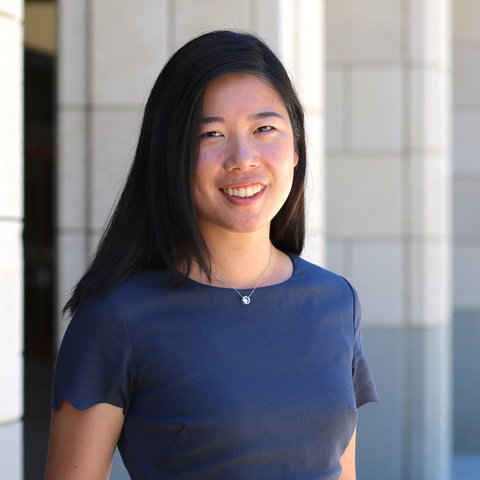
Current Position
Assistant Professor of MS&E
Intersection with the project
Overview
Professor Irene Lo relates to the project through her expertise in operations research, game theory, and market design, with a special focus on increasing efficiency and welfare in smallholder supply chains. Her investigations into how digital platforms can mediate inefficiencies in opaque and informal markets underpin the chatbot’s proposal to act as a centralizer of financial and operational control. The professor’s work offers the scientific basis for transforming the practical, “hands-on” field routine into a structured decision-making system, aiming to reduce hidden costs and optimize resources.
”Two-sided Benefits of Price Transparency in Smallholder Supply Chains” (2025)
This study analyzes the impact of price transparency in agricultural supply chains in developing countries (such as palm oil in Indonesia), mediated by mobile platforms. The central term is “Demand Signaling”, which occurs when buyers use price to indicate how much supply they need, and “Contractual Imbalance”, which describes the asymmetry of needs between different agents. The research investigates how to ensure mutual benefits so that technology adoption is sustainable.
Efficiency in Opaque Markets
- “As a result, price-searching suppliers (smallholder farmers) cannot get the best available price, and price-setting buyers cannot utilize pricing as an efficient signaling mechanism…“. “As a result, price-searching suppliers (smallholder farmers) cannot get the best available price, and price-setting buyers cannot utilize pricing as an efficient signaling mechanism…“.
- Intersection: The project identifies that the lack of centralized control hides productivity bottlenecks and generates accounting friction. The chatbot acts to “bring transparency” to the farm’s expenses and flows, allowing the rural producer to identify waste of inputs and fuel, analogously to the efficiency sought by Lo’s platforms.
Sustainability of Technology Adoption
- “However, to encourage widespread adoption of information platforms and ensure sustained welfare benefits, it is often crucial that both sides of the market benefit…“. “However, to encourage widespread adoption of information platforms and ensure sustained welfare benefits, it is often crucial that both sides of the market benefit…“.
- Intersection: For the rural producer with “low tolerance for complex software,” the bot must deliver immediate value (such as eliminating forgotten payments) so that he accepts “feeding” the system with data. Lo’s research validates that the chatbot’s success depends on this mutual perception of usefulness between field operations and strategic management.
Reducing the Supply-Demand Mismatch
- “Price transparency enables buyers with contractual imbalances to leverage differentiated pricing to signal unequal demand, thereby reducing demand-supply mismatch…“. “Price transparency enables buyers with contractual imbalances to leverage differentiated pricing to signal unequal demand, thereby reducing demand-supply mismatch…“.
- Intersection: The bot’s “Continuous Learning Engine” assimilates the operational routine to suggest resource optimizations. By collecting data on suppliers and routes, the system applies Lo’s mismatch-reduction logic to ensure that the farm’s logistical infrastructure is aligned with tax and maintenance needs, mitigating financial losses.
”Quickest way to less headache days: an operational research model and its implementation for chronic migraine” (2025)
Although applied to health, this research uses Operations Research (OR) to optimize decision-making processes under uncertainty. The model uses the “Multi-armed bandit problem” and the “Gittins Index” to determine the ideal sequence of actions that minimizes the time until an effective solution is discovered. The focus is on replacing human “trial and error” with a mathematical model of continuous learning.
Optimization via Mathematical Models
- “Operations research (OR) is the study of optimal decision-making using mathematical models.”. “Operations research (OR) is the study of optimal decision-making using mathematical models.”.
- Intersection: The project’s schedule plans for August the technical expansion into “Route and routine optimization algorithms.” The OR methodology described by Lo provides the framework for the bot to not just record data, but calculate the most efficient operational trajectories and schedules for the rural property.
Continuous Learning and Guidance
- “This index should be re-evaluated in real time and on each follow up visits to offer continual guidance for the next medication choice.”. “This index should be re-evaluated in real time and on each follow up visits to offer continual guidance for the next medication choice.”.
- Intersection: The bot performs passive and active data collection through “short daily questions.” This constant interaction allows the “real-time” re-evaluation of the farm’s priorities, using Lo’s sequential learning principle to ensure that the system adapts dynamically to changes in the producer’s routine.
Mitigating Frustrations from Process Failures
- “Medication trial failures cause frustrations and helplessness… An expedient way of determining effective prevention therapy can significantly benefit…“. “Medication trial failures cause frustrations and helplessness… An expedient way of determining effective prevention therapy can significantly benefit…“.
- Intersection: The “chronic forgetfulness” of maintenance generates losses and stress for rural producers. The chatbot uses Lo’s systematic decision logic to reduce by 80% the tasks not completed due to forgetfulness, replacing human memory failure with an automated and “expedient” flow of alerts and reminders.
Full papers
Irene Lo - Two-sided Benefits of Price Transparency in Smallholder Supply Chains.pdf Irene Lo - Quickest way to less headache days an operational research model and its implementation for chronic migraine.pdf