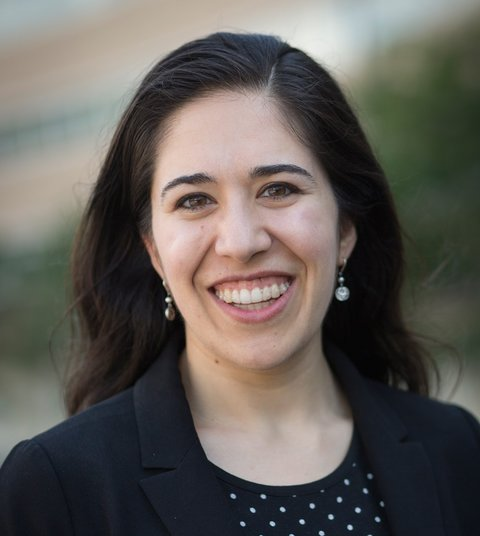
Current Position
Assistant Professor of MS&E and, by courtesy, of Electrical Engineering
Intersection with the Project
Overview
The research conducted by Professor Madeleine Udell provides an essential technical and sociotechnical bridge for the agricultural management chatbot project, especially concerning the democratization of access to complex optimization tools. Her work addresses both the development of artificial intelligence systems capable of translating natural language into rigorous mathematical models and the understanding of barriers to adoption of these tools by non-specialist users. In the context of this project, Udell’s contributions validate the choice of a conversational interface (WhatsApp) for handling real-world data (“messy data”) and transforming the informal routine of rural producers into optimized and reliable management decisions.
”OptiMUS: Scalable Optimization Modeling with (MI)LP Solvers and Large Language Models” (2024)
This research introduces OptiMUS, an agent based on Large Language Models (LLMs) that automates the formulation and solution of optimization problems from natural language descriptions. The system uses an agent-based framework (Manager, Formulator, Programmer, Evaluator) to overcome common limitations of AI models such as long-context processing and complex data handling. The term (MI)LP refers to Mixed Integer Linear Programming, a mathematical technique used to find the best solution among several alternatives, such as route optimization or input usage.
Translation of Natural Language into Action
- “OptiMUS, a Large Language Model (LLM)-based agent designed to formulate and solve (mixed integer) linear programming problems from their natural language descriptions.” “OptiMUS, a Large Language Model (LLM)-based agent designed to formulate and solve (mixed integer) linear programming problems from their natural language descriptions.”
- Intersection: The chatbot uses Advanced Audio Processing to perform semantic interpretation of informal audio messages sent by the producer. Udell’s work provides the technical foundation for these voice commands to be transformed by AI into operational triggers and mathematical models.
Accessibility for Small Businesses and Sectors Without Specialists
- “Automating optimization modeling would allow sectors that cannot afford to have access to optimization experts to improve efficiency using optimization techniques.” “Automating optimization modeling would allow sectors that cannot afford to have access to optimization experts to improve efficiency using optimization techniques.”
- Intersection: The target audience for the chatbot are rural producers who prefer “practical operation” and do not have operational research specialists. The system acts as an automated “executive secretary” that brings optimization efficiency into the farm without requiring advanced technical knowledge from the user.
”“It Was a Magical Box”: Understanding Practitioner Workflows and Needs in Optimization”
This is a qualitative study analyzing the actual workflows of optimization model developers (OMDs). Udell and her collaborators propose the “Three Ds” (Data, Decisions, Dialogue) as pillars for success in real-world optimization projects. The term “Dialogue” refers to continuous communication with stakeholders to build trust, while “Problem Elicitation” describes the phase of translating vague business needs into technical requirements.
Importance of Dialogue for Trust and Adoption
- “Our findings reveal that optimization practice is not only about algorithms that deliver better decisions, but is equally shaped by data and dialogue—the ongoing communication with stakeholders that enables problem framing, trust, and adoption.” “Our findings reveal that optimization practice is not only about algorithms that deliver better decisions, but is equally shaped by data and dialogue—the ongoing communication with stakeholders that enables problem framing, trust, and adoption.”
- Intersection: The project chooses WhatsApp as the main interface due to its “extremely high familiarity.” Udell demonstrates that optimization fails if it is an “opaque magic box”; by using a daily dialogue platform, the chatbot builds the necessary trust for rural producers to accept AI alerts and suggestions.
Dealing with “Messy” Real-World Data
- “Optimization is characterized by messy and incomplete data that inform and constraint model formulation…” “optimization is characterized by messy and incomplete data that inform and constraint model formulation…”
- Intersection: The project’s Continuous Learning Engine handles data extracted from audio, messages, and images of receipts, which are inherently informal and “messy.” Udell highlights that 70% of effort in real-world projects lies in processing such data, validating the technological focus of the project in transforming informal field routines into structured data for management.
Full Papers
Madeleine Udell - OptiMUS Scalable Optimization Modeling with (MI)LP Solvers and Large Language Models.pdf Madeleine Udell - “It Was a Magical Box” Understanding Practitioner Workflows and Needs in Optimization.pdf