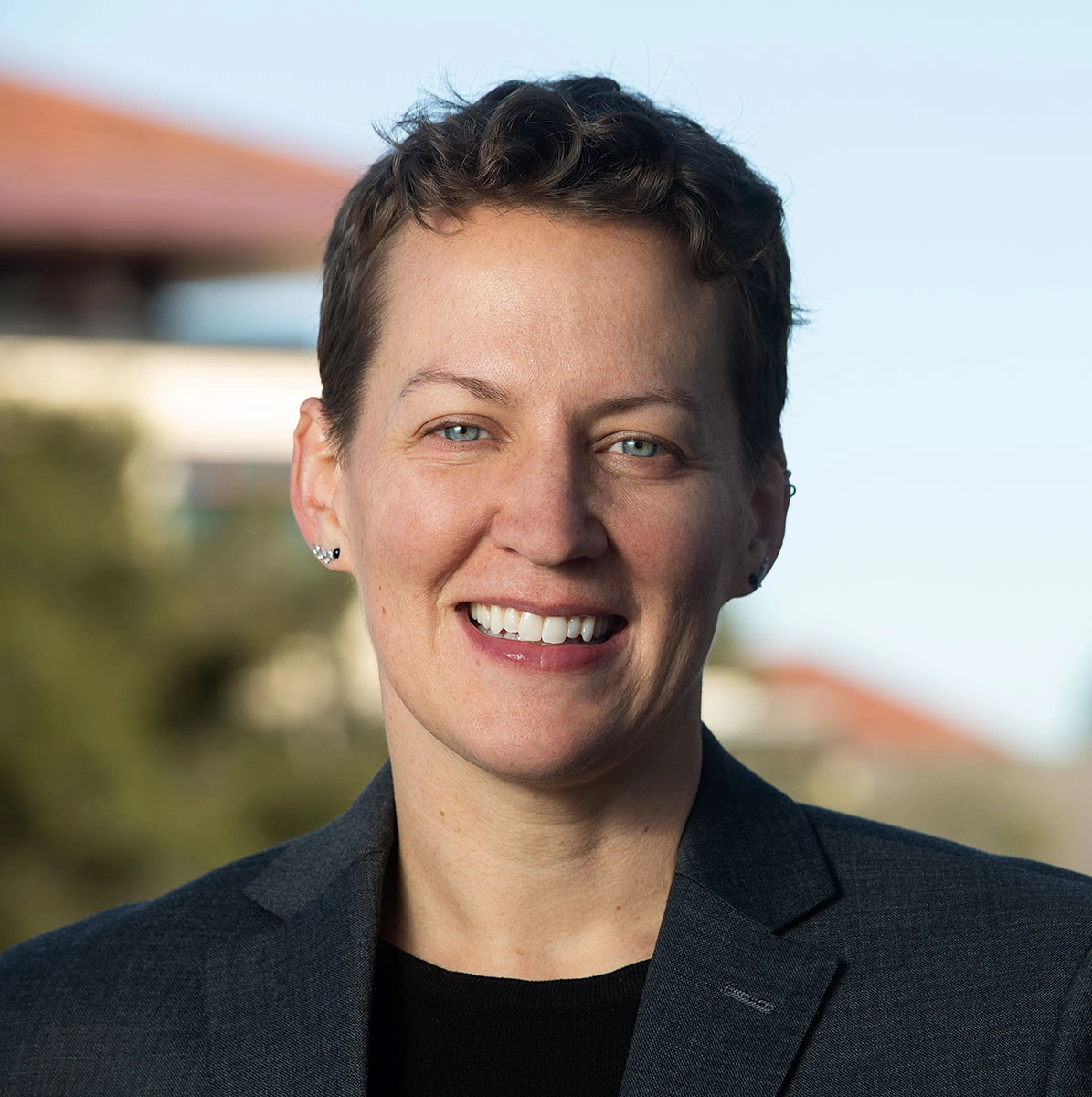
Current Position
Associate Professor of MS&E and Senior Fellow at the Stanford Institute for Human-Centered AI (HAI)
Intersection with the project
Overview
Professor Melissa Valentine’s research underpins the transition from manual work processes to systems augmented by artificial intelligence, focusing on how algorithms and autonomous agents redefine organizational design and work relationships. The agricultural chatbot project relates directly to this line of study by proposing an “automated executive secretary” that inserts itself into a traditionally informal field routine, aiming to structure the operational ecosystem through an AI interface.
”The Algorithm and the Org Chart: How Algorithms Can Conflict with Organizational Structures” (2024)
This ethnographic study analyzes how the introduction of an inventory planning algorithm at a large retailer conflicted with the company’s traditional org chart. In the paper, the cited “algorithm” is a mathematical optimization model designed to recommend clothing purchase plans based on historical sales data. The “larger space” mentioned in the study refers to the decision space. While humans divided decisions into small “boxes” or “segments” (e.g., a buyer just for men’s jeans) to make the work manageable, the algorithm proved far more effective by analyzing the data in aggregate, cross-referencing information from multiple roles and categories simultaneously (what the authors call “roll up the leaf nodes”).
Tensions between human and algorithmic structures
- “the organizational structures that facilitate effective decision-making by humans may be in tension with the organizational structures that facilitate effective decision-making using algorithms”. “the organizational structures that facilitate effective decision-making by humans may be in tension with the organizational structures that facilitate effective decision-making using algorithms”
- Intersection: The agricultural chatbot resolves this tension by using WhatsApp as a “highly familiar” interface to introduce the algorithmic logic of management without requiring the rural producer to break with their natural operational behavior
Exploring the aggregate decision space
- “We saw the algorithm could explore a larger space for better results”. “We saw the algorithm could explore a larger space for better results”
- Intersection: This finding validates the project’s “Continuous Learning Engine.” While the producer focuses on isolated, urgent decisions, the bot collects integrated data on expenses, routes, and logistics, allowing the AI to explore connections and suggest optimizations that segmented human management cannot see due to task overload.
Information processing capacity
- “The algorithm offered increased information processing capacity for individual buyers” “The algorithm offered increased information processing capacity for individual buyers”
- Intersection: The use of advanced audio processing and contextual reasoning via Claude expands the producer’s capacity to manage multiple deadlines and tax data simultaneously, drastically reducing failures due to forgetfulness
”When an AI ‘Agentforce’ enters the workforce: generative AI, employment relations, and the changing social contract” (2025)
This article discusses how generative artificial intelligence and autonomous agents are redefining authority and accountability at work. The research is essential for the project, as it defines AI not just as a tool, but as an agent capable of acting on the user’s behalf.
Autonomy of agent systems
- “Agentic systems go further, using these capabilities to act autonomously by initiating tasks, making decisions, and coordinating actions across digital environments” “Agentic systems go further, using these capabilities to act autonomously by initiating tasks, making decisions, and coordinating actions across digital environments”
- Intersection: The agricultural chatbot fits into this “agent” category by not being merely reactive. Through the “High-Priority Alerts,” the bot initiates coordination tasks, triggering messages and making automatic phone calls to ensure compliance with tax and operational deadlines
Supervision and refinement of the AI’s work
- “Rather than performing tasks from scratch, human workers might increasingly oversee and refine AI-generated outputs, blurring the lines between traditional work and data/AI oversight” “Rather than performing tasks from scratch, human workers might increasingly oversee and refine AI-generated outputs, blurring the lines between traditional work and data/ AI oversight”
- Intersection: In the project’s MVP, the rural producer acts as the supervisor of the “automated secretary.” He validates the schedules extracted from his audios and receives consolidated cash flow reports, allowing him to focus on strategy while the AI handles data structuring
Full papers
Melissa Valentine - The Algorithm and the Org Chart How Algorithms Can Conflict with Organizational Structures.pdf Melissa Valentine - When an AI Agentforce enters the workforce generative AI, employment relations, and the changing social contract.pdf